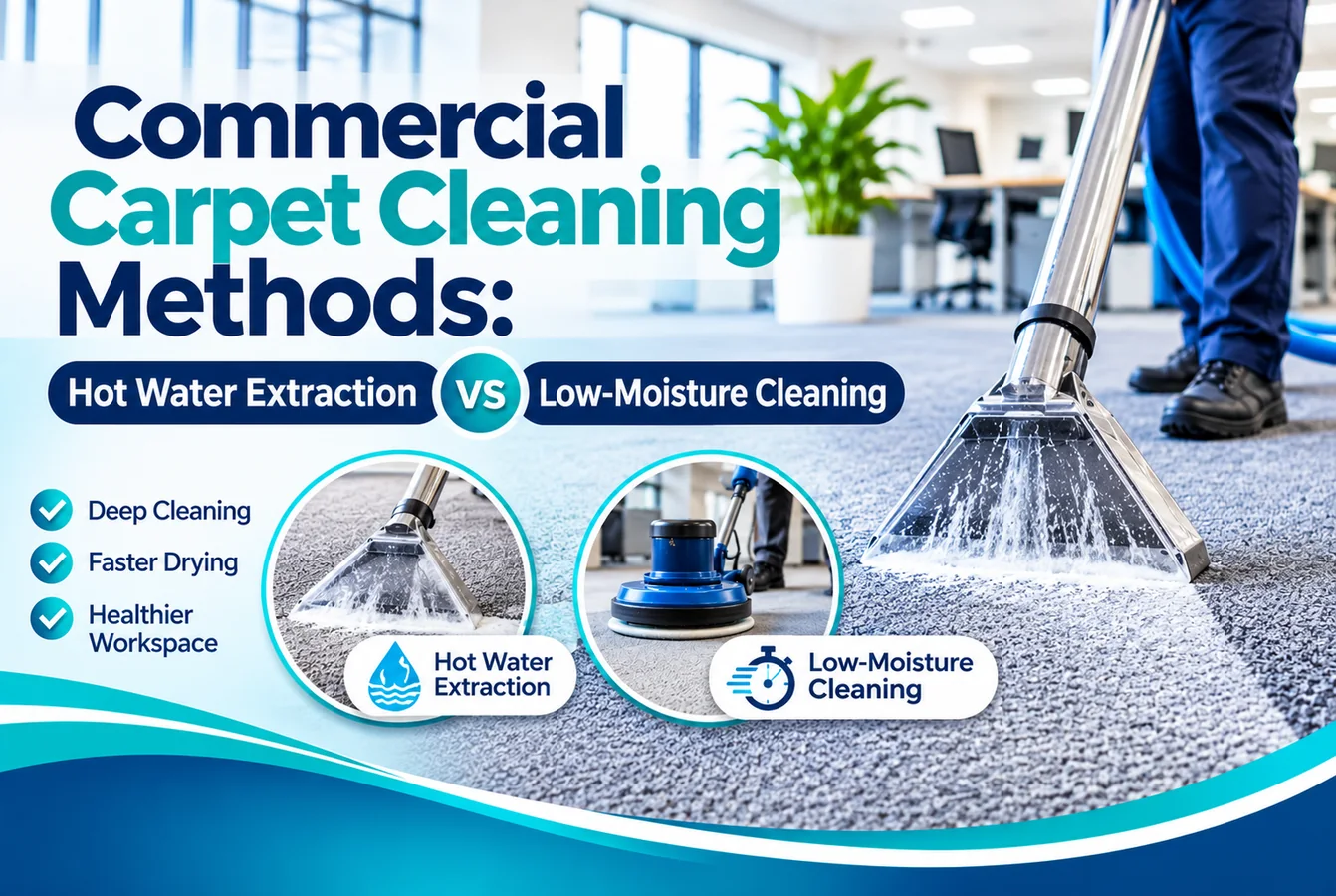
Choosing the right cleaning method is essential for maintaining clean, fresh, and professional-looking business premises. Commercial carpets experience heavy foot traffic every day, collecting dust, dirt, spills, and allergens that regular vacuuming cannot fully remove. Professional Commercial Carpet Cleaning Services help businesses maintain their carpets, improve their appearance, and protect their flooring investment.
Two commonly used professional methods are hot water extraction and low-moisture carpet cleaning. Both can deliver effective results, but they work differently and suit different commercial environments.
In this guide, we compare both methods, explain their benefits, and help you understand which option may be best for your workplace.
Why Do Businesses Need Professional Carpet Cleaning?
Commercial carpets face more wear and tear than residential carpets. Offices, retail stores, hotels, schools and reception areas experience regular foot traffic, which pushes dirt and debris deep into carpet fibres.
Without proper maintenance, this build-up can cause:
-
Visible stains and discolouration.
-
Unpleasant carpet odours.
-
Dull and worn-looking flooring.
-
Dirt accumulation in high-traffic areas.
-
Premature carpet damage and replacement costs.
Regular professional cleaning helps remove embedded dirt, maintain carpet appearance, and create a more welcoming environment for employees, customers, and visitors.
Businesses can also explore our commercial cleaning services to find a suitable cleaning solution for their premises.
What Is Hot Water Extraction Carpet Cleaning?
Hot water extraction is a deep carpet cleaning method commonly used by professional carpet cleaners. It involves applying a suitable cleaning solution to carpet fibres and using hot water extraction equipment to loosen and remove embedded dirt.
The machine then extracts the water, cleaning solution, and loosened soil from the carpet.
Benefits of Hot Water Extraction
1. Deep Cleaning Performance
Hot water extraction reaches deep into carpet fibres to remove accumulated dirt, dust and other contaminants that ordinary vacuuming may leave behind.
2. Helps Remove Stubborn Stains
This method can help treat common commercial carpet stains, including coffee, food spills and marks from everyday workplace activity. Results depend on the stain type, carpet material, and how long the stain has been present.
3. Removes Embedded Dirt
High-traffic areas such as office corridors, entrances, and reception spaces can collect significant amounts of soil. Extraction helps remove this build-up.
4. Supports Long-Term Carpet Maintenance
Removing abrasive dirt from carpet fibres can help reduce wear and support the long-term condition of commercial flooring.
When Is Hot Water Extraction Best?
Hot water extraction is often suitable when:
-
Carpets need a thorough deep clean.
-
Heavy soil has accumulated over time.
-
High-traffic areas have become visibly dirty.
-
A business is arranging periodic maintenance cleaning.
-
Stubborn stains require professional treatment.
One important consideration is drying time. Extracted carpets may need longer to dry than low-moisture cleaned carpets. Proper extraction, ventilation, and suitable scheduling can help reduce disruption.
What Is Low-Moisture Carpet Cleaning?
The method may use encapsulation technology, where cleaning agents surround dirt particles as the solution dries. The resulting residue is then removed through vacuuming.
Benefits of Low-Moisture Cleaning
1. Faster Drying Times
Because less water is used, carpets generally dry faster than with conventional extraction. This can be useful in busy commercial environments.
2. Less Business Disruption
Offices, shops, and other workplaces may be able to return to normal operations sooner, depending on the cleaning system and conditions.
3. Suitable for Routine Maintenance
Low-moisture cleaning can help maintain carpets between deeper cleaning treatments, particularly in areas with regular foot traffic.
4. Practical for Busy Workplaces
Businesses that cannot easily close rooms or move staff for extended periods may benefit from a cleaning method that uses less moisture.
When Is Low-Moisture Cleaning Best?
It may be a suitable option when:
-
Fast drying is a priority.
-
The carpet requires regular maintenance.
-
Business operations need to continue.
-
The carpet has light to moderate soil.
-
A full deep extraction clean is not currently necessary.
However, low-moisture cleaning may not be the best choice for every heavily soiled carpet. The right method depends on the carpet material, soil level, and manufacturer’s recommendations.
Hot Water Extraction vs Low-Moisture Cleaning: Key Differences
Both methods have their place in commercial carpet maintenance. The main difference is how much moisture they use and the cleaning requirements they are designed to address.
| Comparison | Hot Water Extraction | Low-Moisture Cleaning |
|---|---|---|
| Cleaning approach | Water and cleaning solution are extracted from fibres | Uses specialist solutions with limited moisture |
| Water usage | Higher | Lower |
| Drying time | Generally longer | Generally faster |
| Deep cleaning | Suitable for deeper soil removal | More suited to maintenance and lighter soil |
| Business disruption | May require more planning | Often easier to schedule around operations |
| Best suited for | Periodic deep cleaning | Routine maintenance and quicker turnaround |
Neither method is automatically better for every business. A professional assessment can help determine which approach is appropriate.
Which Commercial Carpet Cleaning Method Is Better for Your Business?
The best method depends on your workplace, carpet condition, and operating schedule.
Offices and Corporate Buildings
Offices often have a combination of meeting rooms, corridors, workspaces, and reception areas. Low-moisture cleaning can be practical for routine maintenance, while hot water extraction may be suitable for periodic deep cleaning.
Retail Stores and Shopping Areas
Retail carpets experience continuous foot traffic, making regular maintenance important. A suitable low-moisture method may help maintain appearance between deeper cleans.
Hotels and Hospitality Businesses
Hotels need clean and presentable carpets across reception areas, corridors and guest spaces. Hot water extraction may be useful for deeper cleaning, while low-moisture treatments can help maintain selected areas between intensive cleans.
Schools and Educational Facilities
Classrooms, hallways and communal spaces can collect dirt quickly. The cleaning schedule and method should account for carpet condition, usage and the time available for drying.
For businesses with upholstered reception furniture, our professional sofa cleaning services can also help maintain a clean and welcoming environment.
How Often Should Commercial Carpets Be Professionally Cleaned?
There is no single cleaning schedule for every business. The ideal frequency depends on:
-
Daily foot traffic.
-
Number of employees and visitors.
-
Carpet type and condition.
-
Food and drink activity.
-
Seasonal dirt and moisture.
-
The appearance standards of your business.
For example, a busy retail store may need more frequent attention than a small office with limited visitors.
Regular vacuuming, immediate spill treatment, and scheduled professional cleaning can help maintain carpet condition.
Tips to Maintain Commercial Carpets Between Professional Cleans
Professional cleaning works best when combined with everyday carpet care.
Here are some practical maintenance tips:
-
Vacuum regularly: Pay extra attention to entrances, corridors and reception areas.
-
Use entrance mats: Place mats near doors to reduce the amount of dirt brought inside.
-
Treat spills quickly: Blot spills with a clean cloth rather than rubbing them into the fibres.
-
Avoid harsh chemicals: Use products suitable for your carpet material.
-
Schedule routine cleaning: Do not wait until carpets look heavily soiled.
-
Monitor high-traffic areas: Adjust your cleaning schedule when footfall increases.
If your premises also have decorative or area rugs, consider our professional rug cleaning services as part of your overall maintenance plan.
Why Choose Professional Commercial Carpet Cleaning Services?
Commercial carpet cleaning requires the right equipment, cleaning products and experience. Choosing a professional provider helps ensure the method is selected according to your carpet type, condition and business requirements.
At Prime Carpet Cleaning Experts, commercial cleaning solutions are designed around the needs of different workplaces. The approach considers cleaning requirements, high-traffic areas and drying time to help minimise disruption.
Businesses can also explore professional carpet cleaning services for additional carpet care requirements and leather cleaning services for office seating and other leather furnishings.
Conclusion
Both hot water extraction and low-moisture cleaning offer valuable benefits for commercial carpet maintenance. Hot water extraction is often a good choice for deep cleaning and heavily soiled carpets, while low-moisture cleaning is useful when quicker drying and minimal business disruption are priorities.
The right approach depends on your carpet type, cleaning needs, and workplace schedule. Professional Commercial Carpet Cleaning Services can help you choose a suitable method, maintain your flooring, and create a cleaner environment for employees, customers, and visitors.
Frequently Asked Questions
1. What is the difference between hot water extraction and low-moisture carpet cleaning?
Hot water extraction uses water and cleaning solutions to loosen and remove embedded dirt from carpet fibres. Low-moisture cleaning uses less water and is generally preferred when faster drying is important.
2. Which commercial carpet cleaning method dries faster?
Low-moisture cleaning generally dries faster because it uses less water. Actual drying times depend on the carpet, cleaning system, temperature and ventilation.
3. Is hot water extraction suitable for office carpets?
Yes. Hot water extraction can be suitable for office carpets that need a thorough deep clean, particularly in heavily used areas. The carpet material and manufacturer’s care instructions should always be considered.
4. How often should commercial carpets be professionally cleaned?
It depends on foot traffic, carpet condition, and the type of business. Busy workplaces may need more frequent cleaning than smaller offices with limited footfall.
5. Can both cleaning methods be used in the same building?
Yes. A professional cleaning plan can use hot water extraction for areas requiring deeper cleaning and low-moisture cleaning for areas where quicker drying is a priority.
6. How can I arrange professional commercial carpet cleaning?
You can contact Prime Carpet Cleaning Experts to discuss your premises, carpet condition and cleaning requirements.