
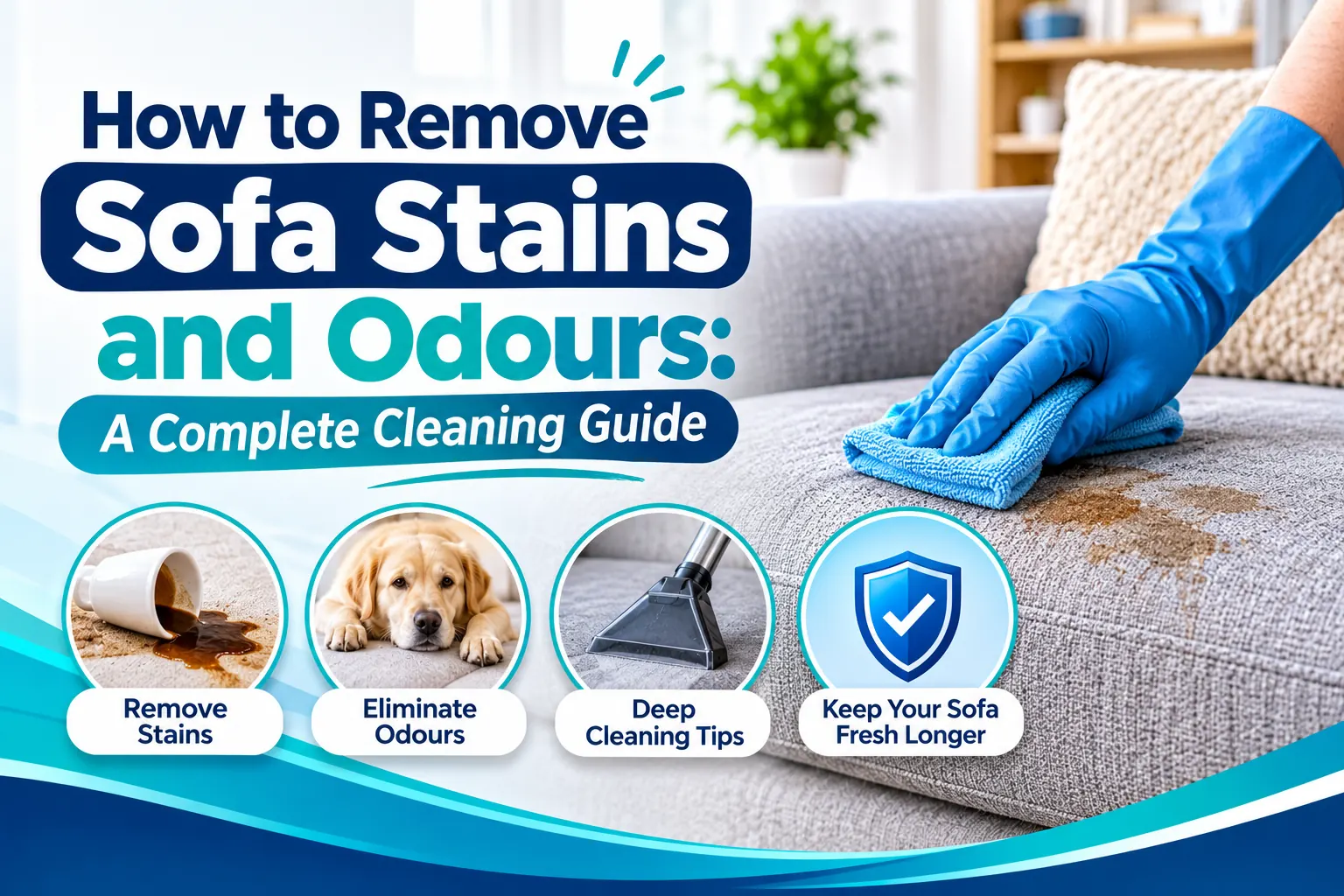
Sofas are used every day, making them vulnerable to food spills, drink stains, pet accidents, dust, and unpleasant odours. Over time, these problems can affect the appearance and freshness of your furniture. Knowing the right Sofa Stain Removal techniques can help you keep your sofa looking clean and comfortable.
However, different upholstery fabrics require different cleaning methods. Using the wrong product or scrubbing too aggressively can damage the material or make a stain more difficult to remove.
In this guide, we explain how to deal with common sofa stains and odours, share practical upholstery care tips, and explain when professional sofa cleaning may be the better option.
1. Identify the Sofa Fabric Before Cleaning
Before attempting any stain removal, identify the material of your sofa. Different upholstery fabrics react differently to water, cleaning products, and friction.
Common sofa materials include:
-
Cotton: Absorbs liquids quickly and may be prone to watermarks.
-
Linen: Requires gentle handling because it can shrink or become damaged.
-
Microfibre: Often easier to maintain but may need specific cleaning products.
-
Velvet: Needs careful treatment to protect its texture and appearance.
-
Leather: Requires suitable leather cleaners and conditioners rather than ordinary fabric cleaning products.
Check the manufacturer’s care label before applying any cleaning solution.
2. How to Remove Common Sofa Stains
Different stains require different approaches. The most important step is to act quickly and avoid rubbing the affected area.
Coffee and Tea Stains
Coffee and tea can leave noticeable marks on upholstery, especially when they are allowed to dry.
How to clean them:
-
Blot the spill gently with a clean, dry cloth.
-
Avoid rubbing, as this can push the liquid deeper into the fibres.
-
Check the upholstery care instructions.
-
If water-based cleaning is permitted, use a small amount of suitable upholstery cleaner according to its directions.
-
Blot with a clean cloth and allow the area to dry naturally.
Food and Grease Stains
Food spills and oily marks can attract dirt and leave greasy patches on sofa fabric.
How to clean them:
-
Carefully remove any solid food using a spoon.
-
Blot excess oil with a clean absorbent cloth.
-
Use a fabric-safe upholstery cleaner suitable for the material.
-
Follow the product instructions and avoid applying too much liquid.
-
Allow the area to dry completely.
Avoid using aggressive scrubbing or household chemicals that may discolour the fabric.
Ink and Pen Marks
Ink stains can be difficult to remove because some inks spread quickly through upholstery fibres.
How to clean them:
-
Do not rub the stain.
-
Check the sofa’s cleaning instructions.
-
Test an appropriate upholstery stain remover on a hidden area.
-
Follow the manufacturer’s directions carefully.
-
Contact a professional if the mark remains.
Pet Stains
Pets can leave urine stains, muddy paw marks, and other messes on sofas. These stains may also cause lingering odours.
How to clean them:
-
Remove any solid residue carefully.
-
Blot fresh liquid using an absorbent cloth.
-
Use a suitable upholstery-safe enzymatic cleaner if the fabric allows it.
-
Follow the product’s instructions.
-
Allow the sofa to dry fully.
For persistent pet odours or stains that have soaked into the upholstery, professional treatment may be more effective.
3. How to Remove Unpleasant Sofa Odours
Sofa odours can develop because of sweat, food spills, pets, moisture, and everyday use. Sometimes, the smell remains even after the visible stain has disappeared.
Here are some ways to manage common sofa odours.
Vacuum Your Sofa Regularly
Dust, crumbs, pet hair, and other debris can accumulate between cushions and inside sofa seams.
Use an upholstery attachment to vacuum:
-
Seat cushions.
-
Back cushions.
-
Armrests.
-
Sofa seams and corners.
-
Areas underneath removable cushions.
Regular vacuuming helps prevent dirt and debris from building up.
Use Baking Soda Carefully
Baking soda is sometimes used to absorb mild odours from upholstery.
If your sofa’s care instructions permit dry powder cleaning:
-
Test a small, hidden area first.
-
Apply a light amount of baking soda.
-
Leave it for the recommended period, avoiding prolonged contact if the manufacturer advises against it.
-
Vacuum thoroughly using an upholstery attachment.
Do not use this method on delicate fabrics or materials that cannot be safely vacuumed.
Allow Proper Air Circulation
Moisture trapped inside upholstery can contribute to musty smells.
Open windows where practical and allow the sofa to dry naturally. Avoid sitting on damp upholstery, as this can cause further problems.
Consider Professional Upholstery Cleaning
If odours remain after basic cleaning, the source may be deep inside the cushions or upholstery. Professional cleaning can help address embedded dirt and odour-causing residues.
Explore our professional sofa cleaning services for specialist upholstery care.
4. Common Sofa Cleaning Mistakes to Avoid
Trying to remove stains without understanding the upholstery material can sometimes make the problem worse.
Avoid these common mistakes:
| Cleaning mistake | Why to avoid it |
|---|---|
| Scrubbing aggressively | Can damage fibres and spread stains |
| Using too much water | May cause watermarks or trapped moisture |
| Applying bleach | Can discolour or damage upholstery |
| Mixing cleaning products | May create harmful chemical reactions |
| Skipping a patch test | Can result in unexpected damage |
| Using unsuitable stain removers | May affect fabric colour and texture |
Always follow the sofa manufacturer’s care instructions and the cleaning product label.
5. DIY Sofa Cleaning vs Professional Sofa Stain Removal
DIY cleaning can be useful for fresh, minor spills, but it may not be enough for older stains, persistent odours or heavily soiled upholstery.
Professional cleaning offers access to specialist equipment and products selected for different upholstery materials.
| Feature | DIY Sofa Cleaning | Professional Sofa Cleaning |
|---|---|---|
| Equipment | Household cleaning tools | Specialist cleaning equipment |
| Stain treatment | Limited to suitable home products | Targeted treatment based on the stain and fabric |
| Deep cleaning | May not reach embedded dirt | Can address deeper soil where the method is suitable |
| Odour treatment | Suitable for some mild odours | Can provide specialist treatment for persistent odours |
| Fabric knowledge | Depends on the homeowner | Professional assessment and material-specific care |
For fresh spills, DIY treatment may be enough. For stubborn marks and persistent smells, professional Sofa Stain Removal can help restore the appearance and freshness of suitable upholstery.
6. How Often Should You Clean Your Sofa?
The ideal sofa cleaning frequency depends on how often it is used and the environment in which it is kept.
Consider these factors:
-
Regular household use: Vacuum weekly and arrange professional cleaning when needed.
-
Homes with pets: Clean more frequently because of pet hair, dirt and accidental spills.
-
Homes with children: Treat spills quickly and monitor heavily used seating areas.
-
Guest rooms: Occasional cleaning may be sufficient if the sofa is rarely used.
-
Commercial spaces: Reception areas and waiting rooms may need more frequent upholstery maintenance.
Regular care helps prevent dirt from accumulating and keeps furniture looking presentable.
7. Tips to Keep Your Sofa Clean for Longer
A few simple habits can reduce staining and help maintain your upholstery.
-
Vacuum regularly: Remove dust, crumbs and pet hair from cushions and corners.
-
Treat spills immediately: Blot fresh spills instead of allowing them to dry.
-
Avoid eating on the sofa: This can reduce food and grease stains.
-
Use washable covers: Where suitable, removable covers can provide additional protection.
-
Rotate cushions: This helps distribute everyday wear more evenly.
-
Arrange professional cleaning: Schedule a suitable deep clean when regular maintenance is no longer enough.
If your home also needs carpet care, explore our professional carpet cleaning services. You can also consider our rug cleaning services to maintain other upholstered and fabric surfaces around your home.
8. Why Choose Professional Sofa Cleaning?
Professional sofa cleaning helps address dirt, stains, and odours that ordinary household cleaning may not fully remove.
At Prime Carpet Cleaning Experts, the cleaning approach should be selected according to the upholstery material, its condition and the type of staining.
Professional assessment is particularly useful for:
-
Stubborn food and drink stains.
-
Pet-related stains and odours.
-
Heavily used sofas.
-
Delicate upholstery fabrics.
-
General deep cleaning and maintenance.
For other specialist furniture care, you can also explore our leather cleaning services.
Conclusion
Keeping your sofa clean requires regular maintenance and the right approach to stain removal. Coffee, food, grease, ink and pet accidents can all affect upholstery, while trapped dirt and moisture may contribute to unpleasant odours.
By identifying your sofa fabric, treating spills carefully and avoiding harsh cleaning products, you can help maintain its appearance and condition.
For stubborn stains, persistent smells and deeper upholstery cleaning, professional Sofa Stain Removal can be a practical solution. Regular sofa care helps keep your furniture fresh, comfortable, and welcoming for longer.
Frequently Asked Questions
1. What is the best way to remove stains from a fabric sofa?
The best approach depends on the fabric and stain type. Generally, blot fresh spills, check the manufacturer’s cleaning instructions, and use a suitable upholstery cleaner after testing it on a hidden area.
2. How do I remove bad smells from my sofa?
Start by vacuuming the upholstery and allowing proper air circulation. For suitable fabrics, a small amount of baking soda may help with mild odours. Persistent smells may require professional treatment.
3. Can vinegar remove sofa stains?
Vinegar is not suitable for every upholstery material. It may cause discolouration or damage, so check the manufacturer’s instructions and avoid applying it without testing the material first.
4. How can I remove old stains from a sofa?
Old stains can be more difficult to remove because they may have penetrated the upholstery fibres. A professional cleaner can assess the fabric and choose an appropriate treatment.
5. Does professional sofa cleaning remove pet odours?
Professional cleaning can help treat pet-related odours, depending on their source, how deeply they have penetrated and the upholstery material. Some severe cases may require additional treatment.
6. How often should I get my sofa professionally cleaned?
It depends on household use, pets, children, and the condition of the upholstery. Regular vacuuming and prompt spill treatment can help maintain the sofa between professional cleans.